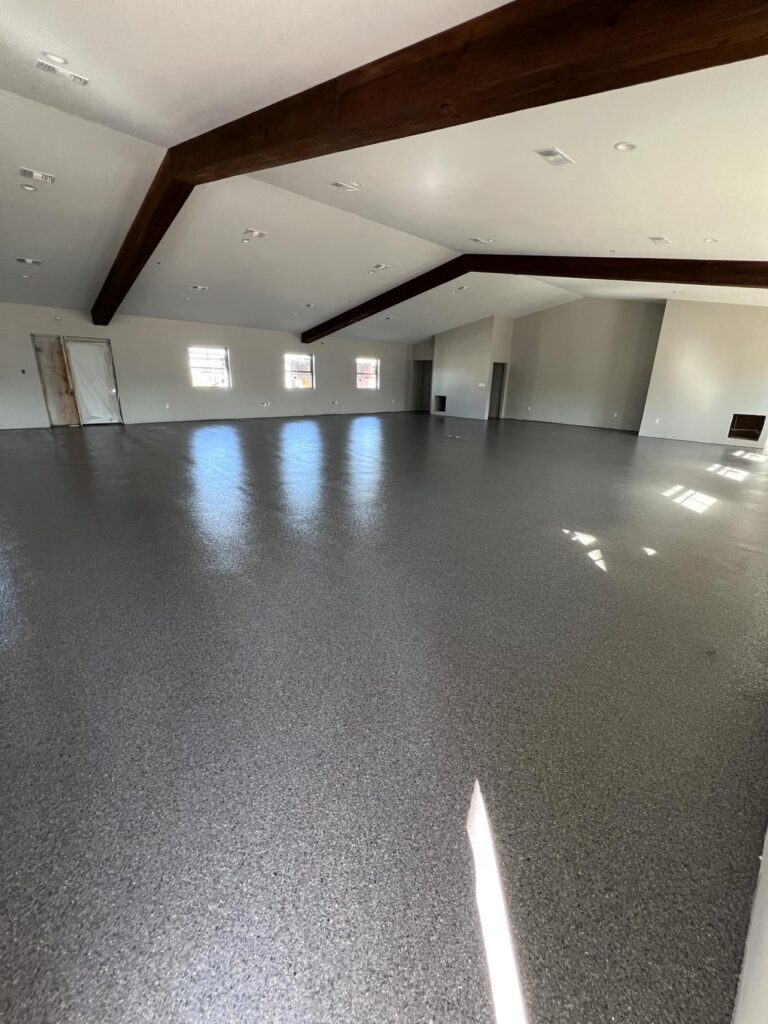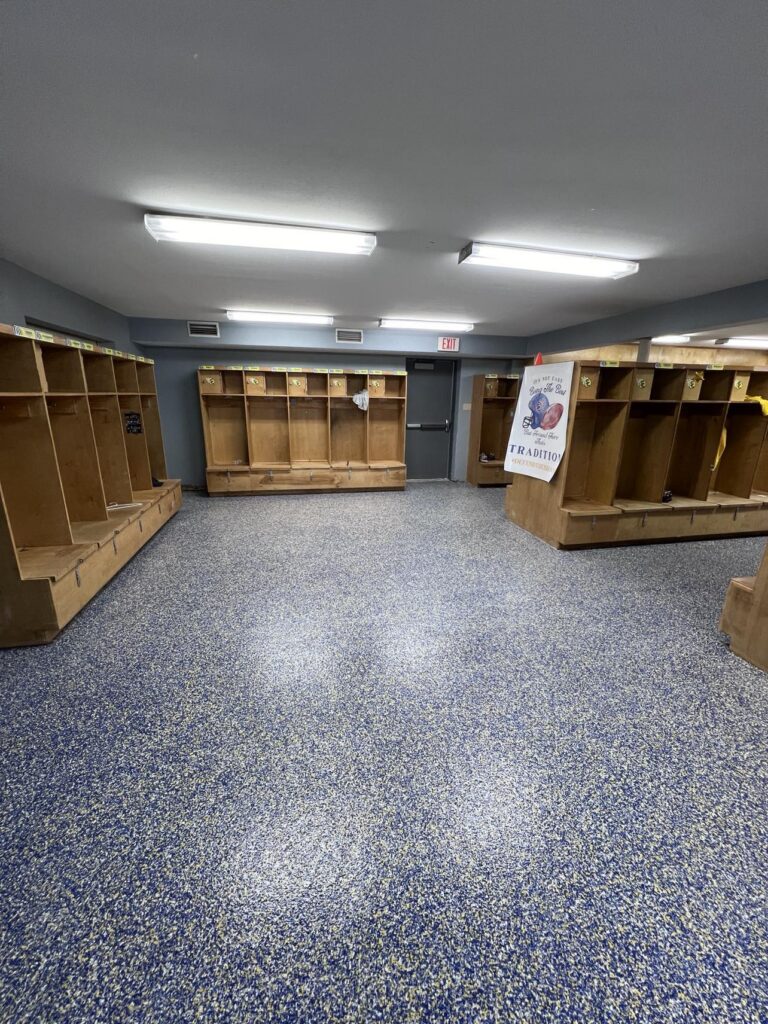
Restaurant kitchens in Hammond, Louisiana operate under tough conditions—constant foot traffic, hot pans, moisture, grease, cleaning chemicals, dropped utensils, and strict health-safety regulations. Choosing the right flooring can make or break a kitchen’s efficiency, hygiene, and long-term costs.
Two of the most popular commercial kitchen flooring systems are epoxy coatings and polished concrete. While both offer durability and easy maintenance, they perform differently under the demands of a restaurant back-of-house environment.
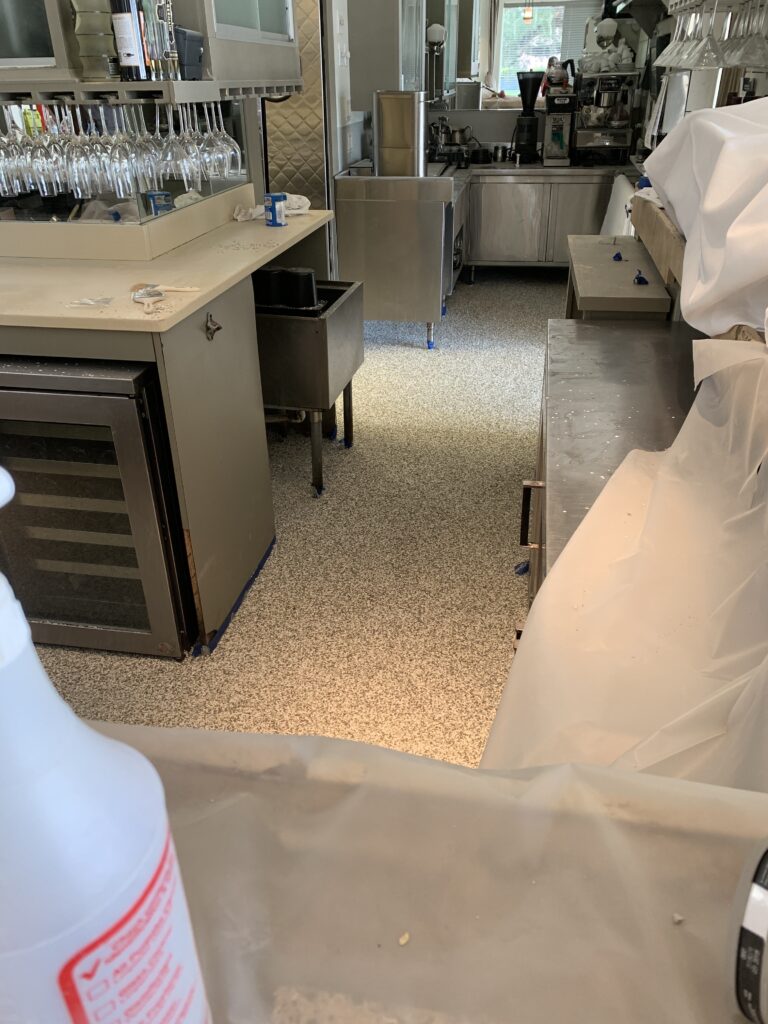
In this guide, we compare epoxy vs. polished concrete to determine which flooring system is best suited for Hammond restaurants.
1. Durability Under Heavy Kitchen Use
Commercial kitchens require flooring that can withstand daily abuse: rolling carts, equipment, heat, spills, and constant movement.
Epoxy Flooring Durability
- Highly impact-resistant
- Ideal for high-moisture areas
- Resists abrasion, dropped pans, and rolling kitchen equipment
- Forms a protective layer over the concrete
Polished Concrete Durability
- Strong but more susceptible to staining
- Can scratch or etch from acidic foods (lemon, vinegar)
- Not ideal for constant grease exposure without a guard treatment
- May dull over time in high-traffic or wet areas
2. Slip Resistance & Worker Safety
Chef and staff safety is critical. Restaurant floors should minimize slip hazards, especially when water, oil, or grease are present.
Epoxy Flooring Safety
- Can be customized with anti-slip additives
- Maintains traction even when wet
- Reduces risk of slip-and-fall accidents
- Ideal for dish pits, prep stations, and fry lines
Polished Concrete Safety
- Naturally smooth, can become slick when wet
- More prone to slip hazards unless treated with a traction guard
- Not recommended for consistently wet or greasy areas
3. Chemical, Oil & Stain Resistance
Kitchen floors face constant exposure to oils, sauces, acids, and cleaning chemicals.
Epoxy Flooring
- Fully non-porous
- Resists grease, oils, acids, sanitizers, and food spills
- Prevents stains and permanent discoloration
Polished Concrete
- Porous unless sealed
- Can absorb oils and organic stains
- Requires re-sealing to maintain stain protection
4. Hygiene, Cleanliness & Health Code Compliance
Restaurant kitchens must meet strict sanitation standards from Louisiana health inspectors.
Epoxy Hygiene Benefits
- Seamless, no grout lines
- Prevents bacterial growth
- Easy to sanitize
- Moisture-proof surface
- Meets FDA/USDA sanitation standards
Polished Concrete Hygiene
- Harder to sanitize due to microscopic pores
- Can harbor bacteria if not properly sealed
- Requires frequent cleaning to avoid absorption
5. Aesthetic Appeal & Design Options
While back-of-house areas prioritize durability, front-of-house spaces may favor aesthetics.
Epoxy Flooring
- Available in solid colors, flakes, quartz, and custom designs
- Can be matched to restaurant branding
- High-gloss or satin finishes available
Polished Concrete
- Sleek, modern, minimalist look
- Popular in dining areas or bars
- Reflective finish brightens rooms
6. Installation & Downtime Considerations
Epoxy Installation
- Requires concrete prep
- Curing time ranges from 24–48 hours
- Faster installation options available (polyaspartic topcoats)
Polished Concrete Installation
- Grinding and densifying take longer
- Requires dry conditions
- Not ideal for kitchens needing quick turnaround
7. Cost & Long-Term Value
Epoxy Cost Benefits
- Lower long-term maintenance
- Reduces cleaning labor costs
- Prevents costly concrete repairs
- Longer lifespan in harsh conditions
Polished Concrete Costs
- Lower upfront cost
- Requires regular sealing
- Can need resurfacing in heavy kitchen use
Final Verdict: Best Flooring for Hammond Restaurant Kitchens
For back-of-house commercial kitchens, the clear winner is:
Epoxy Flooring
It provides unmatched performance in:
- Slip resistance
- Chemical & oil protection
- Hygiene & sanitation
- Durability under heat, moisture & heavy use
For front-of-house dining spaces, polished concrete can be a stylish, cost-effective alternative—but most Hammond restaurants benefit from epoxy where food is prepared.