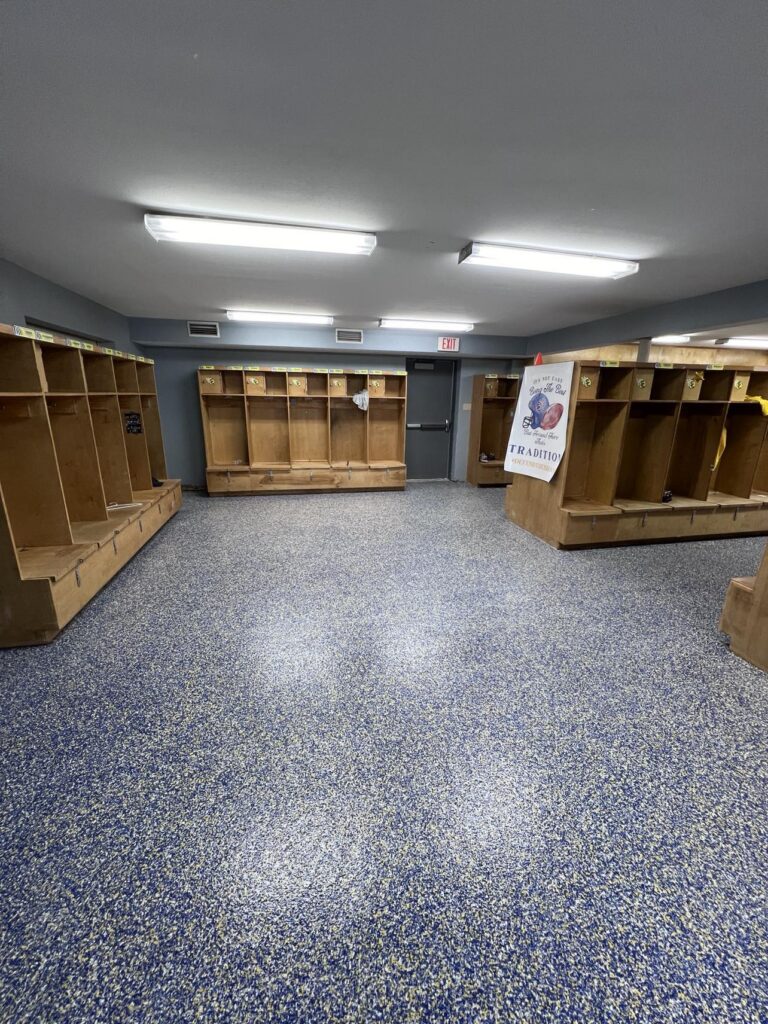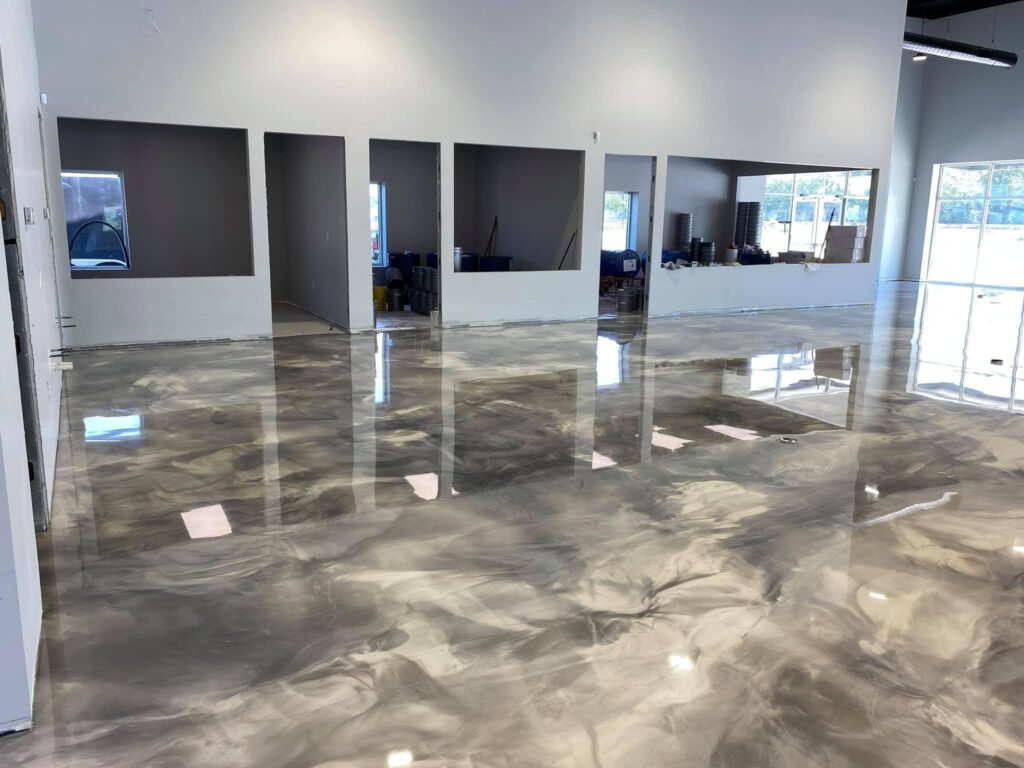
Choosing the right classroom flooring is a major decision for school administrators and facility managers. The flooring must be safe, durable, easy to clean, and cost-efficient—while also supporting heavy foot traffic, desks, chairs, and daily classroom activities.
Two popular choices for school flooring are epoxy and vinyl, but each performs very differently in educational environments. Understanding the strengths and limitations of each flooring type can help schools make smarter long-term decisions.
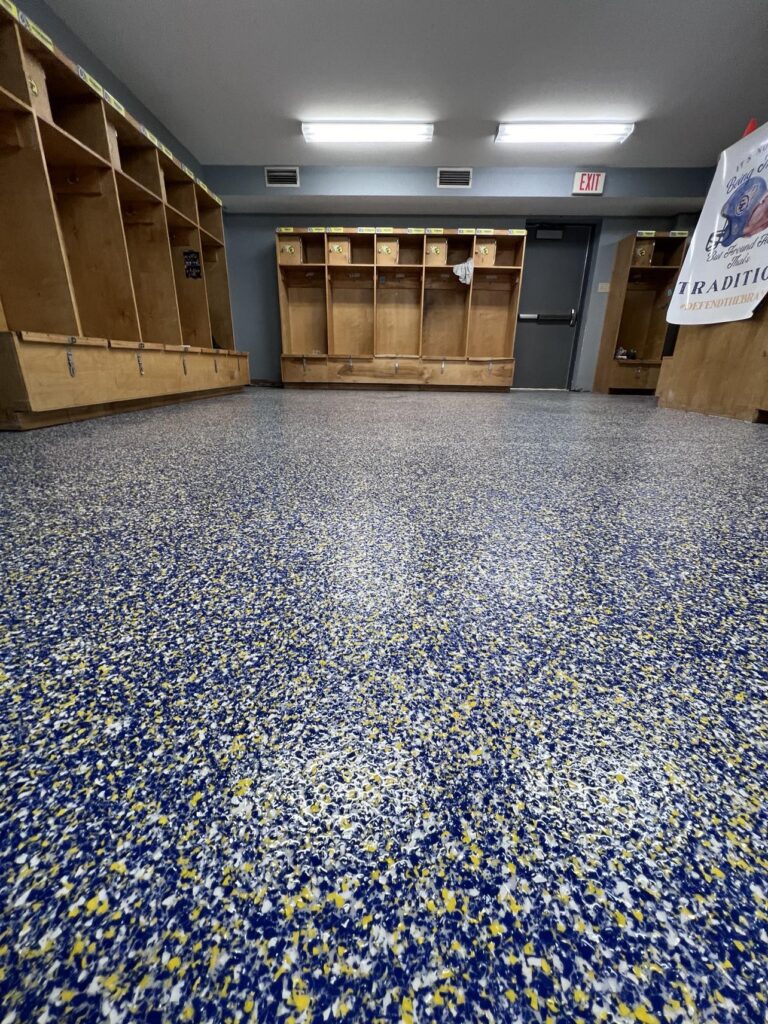
Below, we break down the comparison of Epoxy vs. Vinyl and determine which is the best flooring option for modern classrooms.
1. Durability: Which Flooring Lasts Longer in Classrooms?
Classrooms experience constant movement—students walking, chairs sliding, desks shifting, rolling carts moving between rooms, and janitorial equipment passing through daily.
Epoxy Classroom Flooring Durability
- Extremely durable and impact-resistant
- Can last 15–20+ years
- Won’t dent, peel, rip, or crack from heavy use
- Withstands rolling chairs and desks without damage
Vinyl Classroom Flooring Durability
- Moderate durability
- Can tear, scratch, or dent under heavy traffic
- Usually lasts 7–12 years before replacement
- Seams can separate or bubble in humid environments
Verdict: Epoxy is significantly more durable and cost-efficient for high-use classrooms.
Keywords:
durable school flooring, epoxy classroom floors, long-lasting flooring for schools
2. Safety: Which Flooring Helps Prevent Student Accidents?
Safety is one of the top concerns in any educational environment.
Epoxy Safety Benefits
- Slip-resistant options available
- Seamless surface reduces tripping hazards
- Won’t lift, peel, or curl at the corners
- Ideal for hallways, science labs, and multipurpose rooms
Vinyl Safety Concerns
- Seams and edges can lift, creating trip hazards
- Can become slippery when wet
- Tearing can expose sharp edges
- Not as structurally stable under rolling loads
Verdict: Epoxy is safer and more stable for classrooms and hallways.
Keywords:
safe school flooring, slip-resistant epoxy, classroom safety flooring
3. Hygiene & Cleanliness: Which Flooring Supports a Healthier Classroom?
Schools need flooring that prevents bacterial growth and is easy to sanitize—especially with increasing health and cleanliness standards.
Epoxy Hygiene Advantages
- Completely seamless and non-porous
- No seams or grout lines where bacteria hide
- Easy to disinfect
- Resists stains, odors, and moisture
- Helps improve indoor air quality
Vinyl Hygiene Limitations
- Seams can harbor dirt, germs, and allergens
- Susceptible to moisture damage
- Can absorb odors over time
- Requires more aggressive cleaning to stay sanitary
Verdict: Epoxy creates a significantly more hygienic classroom environment.
Keywords:
hygienic school flooring, seamless epoxy, allergen-free classroom floors
4. Maintenance: Which Flooring Is Easier (and Cheaper) to Maintain?
Schools must maintain flooring regularly while keeping maintenance budgets under control.
Epoxy Maintenance Benefits
- Requires minimal cleaning
- Simple sweeping and mopping
- No waxing, stripping, or polishing needed
- Doesn’t stain from markers, paint, or spills
- Reduces long-term maintenance labor
Vinyl Maintenance Requirements
- May require periodic waxing or polishing
- More prone to scratches and gouges
- Needs patching or replacement when damaged
- Deep cleaning needed for stubborn dirt in seams
Verdict: Epoxy is far more cost-effective to maintain long-term.
Keywords:
low-maintenance school flooring, easy-clean epoxy floors, classroom flooring maintenance
5. Cost: Which Flooring Provides Better Long-Term Value?
Epoxy Flooring Costs
- Higher upfront investment
- Much lower life-cycle cost
- Fewer repairs and replacements
- Long lifespan and minimal maintenance
Vinyl Flooring Costs
- Lower upfront cost
- Higher long-term costs due to shorter lifespan
- Frequent replacements and patching needed
- More labor-intensive cleaning requirements
Verdict: Epoxy has a better long-term ROI for school districts and facilities.
Keywords:
cost-effective school flooring, epoxy vs vinyl cost, school flooring budget planning
6. Aesthetic & Design Options
Both flooring types offer design flexibility, but epoxy shines in durability-focused environments.
Epoxy Aesthetic Options
- Solid colors
- Flake systems
- Quartz systems
- High-gloss or satin finishes
- Custom color-coding for safety zones
Vinyl Aesthetic Options
- Wood-look and stone-look designs
- Wide variety of colors and patterns
- Works well in administrative areas and libraries
Verdict: Vinyl wins in decorative variety, but epoxy wins where function and safety matter most.
7. Uses for Each Flooring Type in Schools
Best Areas for Epoxy
- Classrooms
- Science labs
- Cafeterias
- Restrooms
- Hallways
- Gym locker rooms
- Teacher prep areas
- Special education rooms
Best Areas for Vinyl
- Administrative offices
- Music rooms
- Libraries
- Conference rooms
- Low-traffic spaces
Conclusion: Epoxy Is the Best Flooring Choice for Classrooms
While vinyl offers attractive designs and a lower upfront cost, epoxy flooring is the superior choice for classroom environments due to its unmatched durability, hygiene, safety, and long-term cost savings.
For schools aiming to reduce maintenance budgets, improve student safety, and create cleaner learning environments, epoxy classroom flooring delivers the best overall value.