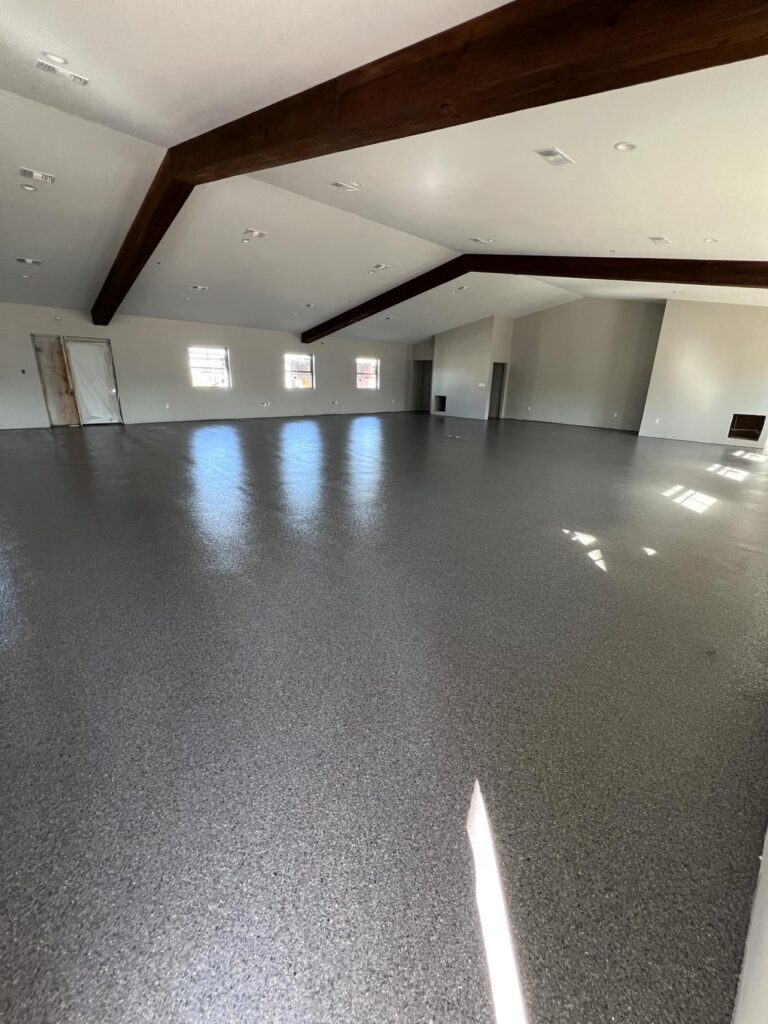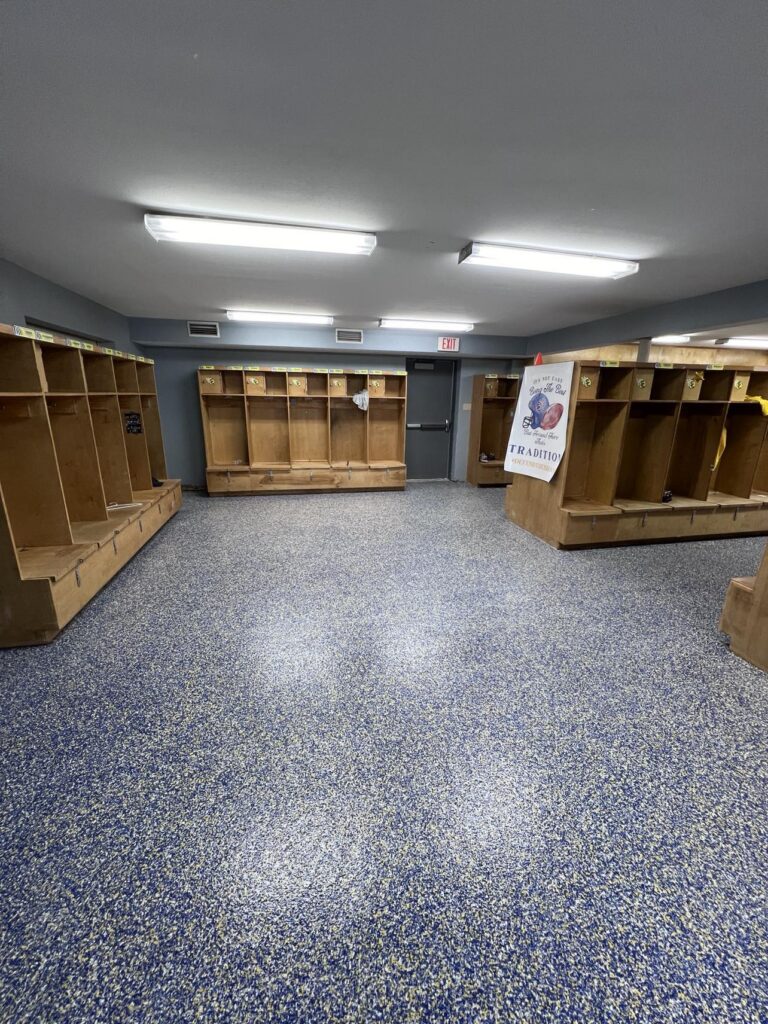
Warehouse safety is more than a regulatory requirement—it’s essential for protecting employees, protecting inventory, and keeping operations running efficiently. Whether your facility manages logistics, manufacturing, distribution, or storage, unsafe flooring can quickly become a major source of accidents and operational downtime.
Epoxy floor coatings offer one of the most effective ways to improve overall warehouse safety. Beyond their durability and chemical resistance, epoxy floors help reduce slip hazards, increase traction, improve lighting visibility, and support OSHA-compliant traffic systems.
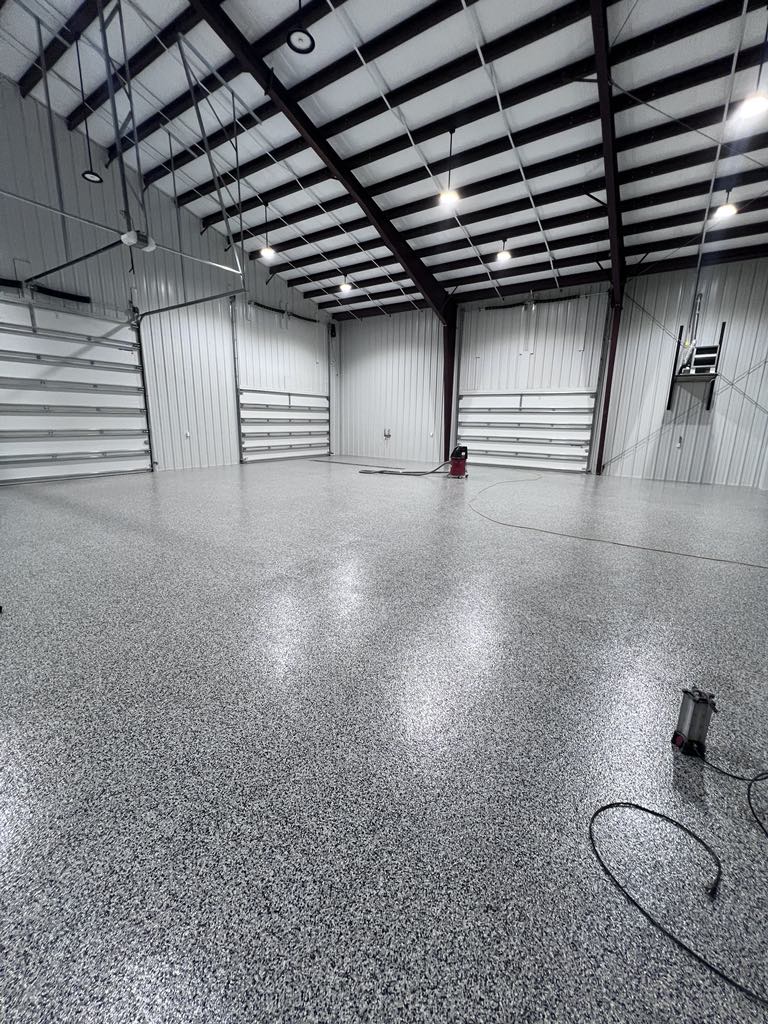
In this article, we’ll explore how epoxy coatings directly contribute to stronger safety standards in industrial warehouses.
1. Slip-Resistant Surface to Prevent Workplace Accidents
Slips, trips, and falls are among the most common warehouse accidents—especially in areas exposed to moisture, oils, or spills. Epoxy flooring can be customized with anti-slip aggregates that create a textured surface to improve traction.
Safety Benefits
- Reduces slip hazards in high-risk areas
- Enhances traction for foot traffic and forklifts
- Maintains grip even when wet or contaminated
- Supports a safer walking and driving environment
2. Seamless Surface Reduces Dust & Trip Hazards
Bare concrete often cracks or becomes uneven, creating tripping hazards and generating concrete dust that can irritate workers’ respiratory systems. Epoxy coatings create a smooth, seamless floor that eliminates cracks, grout lines, and uneven transitions.
Safety Advantages
- Minimizes trip hazards
- Reduces dust and airborne particles
- Enhances indoor air quality in busy facilities
- Ensures smoother forklift and cart movement
This results in a cleaner, safer, and more controlled warehouse environment.
3. High-Visibility Flooring Improves Lighting & Awareness
Visibility plays a major role in preventing warehouse accidents, especially in facilities using heavy machinery. Epoxy floors feature a naturally reflective surface that amplifies lighting by up to 300% in large spaces.
Visibility Benefits
- Improves awareness for forklift operators
- Reduces shadows and blind spots
- Supports better navigation in dim warehouse areas
- Lowers energy costs by reducing reliance on overhead lighting
Better visibility = fewer costly mistakes and accidents.
4. Color-Coded Safety Zones for OSHA Compliance
One of the biggest advantages of epoxy flooring is its ability to support OSHA-recommended color-coded marking systems.
Epoxy coatings allow clear, durable delineation of:
- Walkways & pedestrian zones
- Forklift and machine pathways
- Loading and unloading areas
- Hazard zones
- Emergency exits
- Assembly and staging areas
Safety & Compliance Benefits
- Prevents collisions between pedestrians and equipment
- Ensures compliance with OSHA 29 CFR 1910
- Organizes workflow
- Improves employee awareness of safe zones
Color-coded epoxy keeps traffic flow structured and reduces confusion.
5. Chemical Resistance That Eliminates Hazard Risks
Industrial warehouses encounter spills from oils, solvents, chemicals, and cleaning solutions. Bare concrete absorbs these substances, leading to slippery surfaces, contaminants, and chemical degradation.
Epoxy floors create a non-porous, chemical-resistant barrier, making cleanup safer and faster.
Safety Benefits
- Prevents hazardous chemical absorption
- Stops floor erosion that leads to trip hazards
- Reduces toxic exposure risks
- Supports strict sanitation requirements
This is crucial for warehouses handling chemicals, automotive parts, food processing supplies, or industrial manufacturing.
6. Heat, Fire, and Impact Resistance for Added Protection
Epoxy flooring systems can withstand extreme temperatures and provide moderate fire resistance. They also protect concrete from heavy impacts caused by dropped pallets, machinery collisions, and rolling equipment.
Safety Advantages
- Protects personnel from floor failures
- Minimizes fire hazards in high-risk zones
- Reduces structural damage caused by impacts
- Enhances long-term floor integrity
7. Smooth Machinery Movement Prevents Operational Hazards
Uneven or damaged floors can cause equipment instability, which is a major cause of warehouse accidents. Epoxy flooring creates an ultra-smooth surface that supports:
- Stable forklift maneuvering
- Accurate stopping distances
- Smoother pallet jack navigation
- Reduced equipment vibration
This improves both operator control and machinery longevity.
Conclusion: Epoxy Coatings Are a Smart Investment in Warehouse Safety
Epoxy floor coatings offer far more than durability—they actively enhance safety standards throughout the warehouse. From better traction and visibility to chemical resistance and compliant safety striping, epoxy creates a safer environment for both workers and machinery.
For warehouse managers who want to reduce accidents, increase efficiency, and stay compliant with OSHA standards, epoxy flooring is one of the most effective upgrades available.