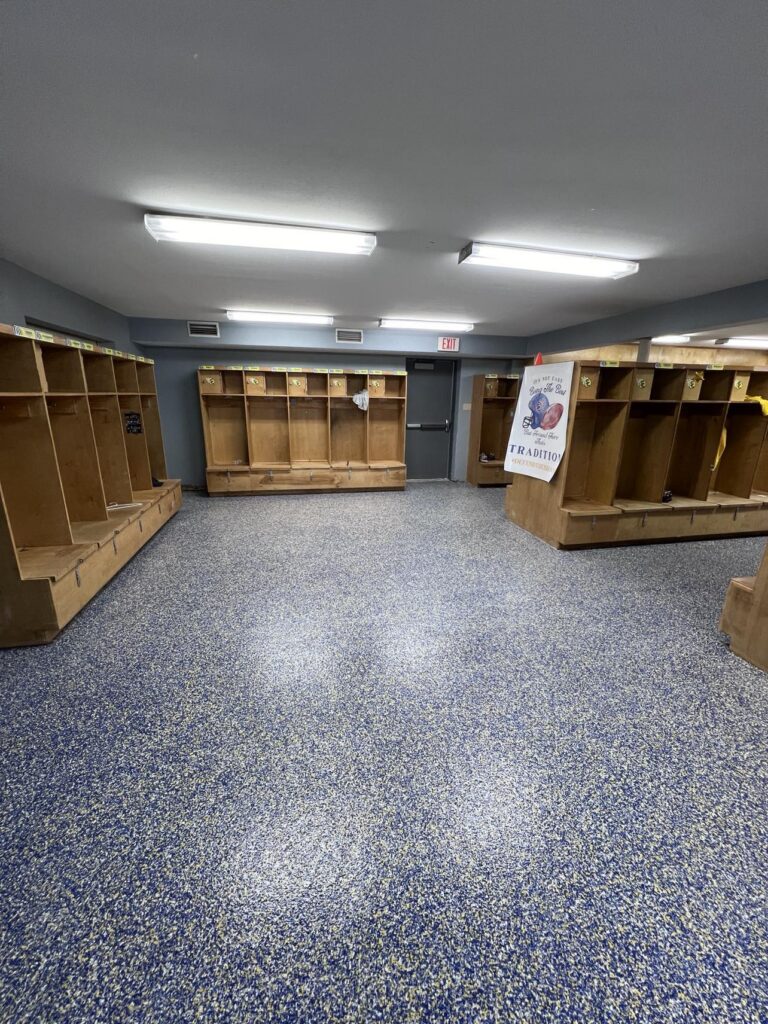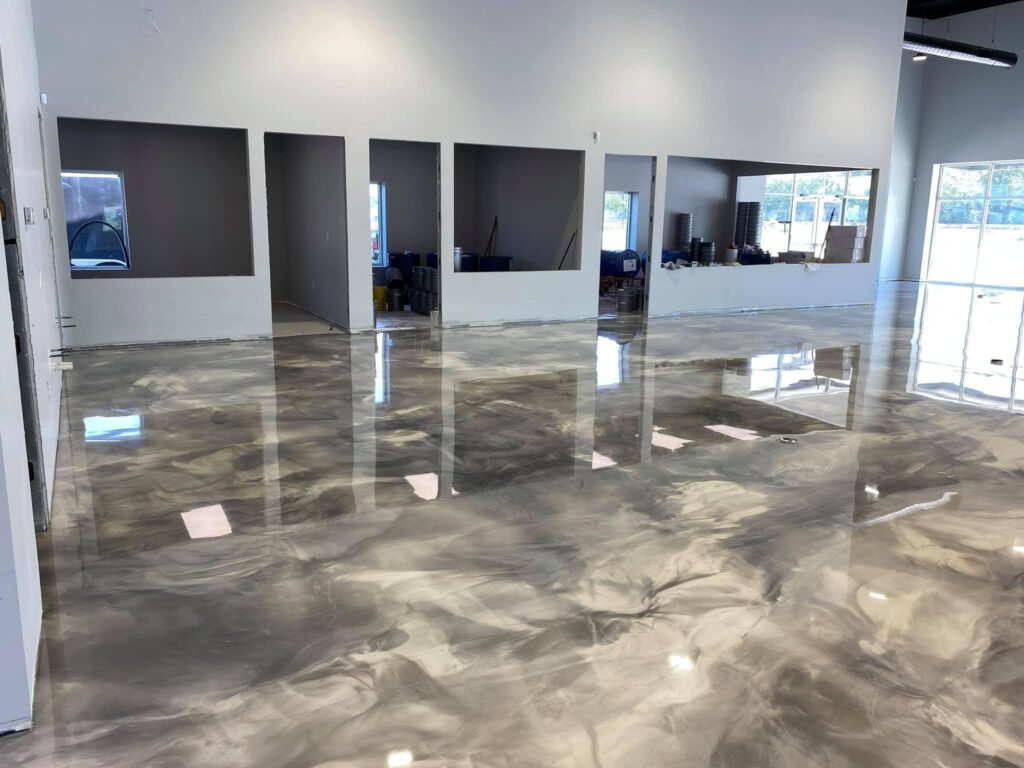
Warehouse flooring isn’t just a surface—it’s a long-term investment. For property managers responsible for maximizing operational efficiency and reducing expenses, flooring failures can quickly impact budgets, tenant satisfaction, and facility performance.
This is why more property managers are turning to epoxy warehouse flooring. It offers exceptional durability, low maintenance requirements, and decades of performance—making it one of the most cost-effective flooring solutions for industrial properties.
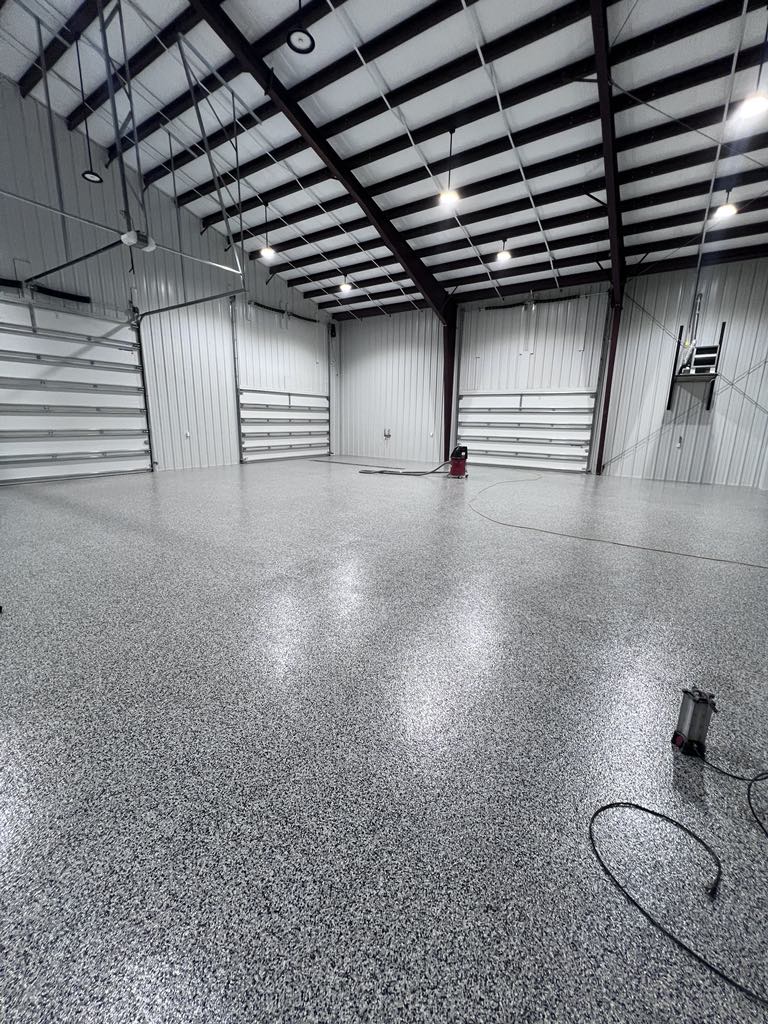
Below, we break down the key ways epoxy flooring delivers immediate and long-term cost savings for property managers.
1. Lower Maintenance Costs Compared to Traditional Flooring
Unlike VCT, tile, bare concrete, or polished surfaces that require ongoing waxing, stripping, and frequent repairs, epoxy floors are extremely low maintenance.
Maintenance Cost Benefits
- No waxing or polishing needed
- Simple sweeping and occasional mopping
- Reduced cleaning labor
- Less equipment and cleaning product usage
Many property managers report up to 40–60% reduction in annual floor maintenance costs after switching to epoxy.
2. Long-Lasting Performance Reduces Replacement Costs
A major budget drain for industrial properties is recurring floor replacement. Traditional warehouse flooring systems often need replacement every 5–10 years due to cracking, staining, chemical exposure, or traffic damage.
Epoxy floors, however, can last 15–20+ years with proper installation and care.
Longevity Advantages
- Fewer replacements over the life of the facility
- Minimal downtime associated with flooring work
- Avoids costly demolition of damaged slab areas
- Provides stable, long-term value for property managers
This significantly lowers life-cycle costs and increases overall ROI.
3. Prevents Expensive Concrete Repairs
Bare concrete absorbs moisture, chemicals, oils, and impacts from machinery—leading to cracks, pitting, and surface erosion. These structural issues are costly to repair and often require resurfacing or slab replacement.
Epoxy flooring works as a protective barrier, reducing the need for expensive repairs.
Concrete Protection Benefits
- Prevents cracking, spalling, and deterioration
- Shields against moisture vapor and chemical corrosion
- Reinforces the slab against heavy forklift traffic
- Reduces the likelihood of full floor resurfacing
Instead of reacting to damage, property managers can prevent it—saving thousands in repair expenses.
4. Reduces Downtime and Operational Disruptions
Every hour a warehouse is shut down for cleaning, repairs, or floor replacement costs money—both for property managers and tenants. Epoxy flooring significantly reduces interruptions.
Downtime Reduction Advantages
- Faster cleaning = less work stoppage
- Fewer repairs = fewer shutdowns
- Minimal maintenance = consistent operations
- High durability = no unexpected floor failures
A warehouse that stays fully operational is far more profitable, making epoxy a smart financial decision.
5. Improves Lighting Efficiency & Reduces Energy Costs
Epoxy flooring’s reflective finish naturally brightens large warehouse spaces. This reduces the dependence on high-intensity overhead lighting and helps lower energy usage.
Lighting Savings
- Reflects up to 300% more light
- Improves visibility and reduces accidents
- May allow lower-wattage lighting configurations
- Helps tenants lower utility bills
Brighter floors enhance workplace safety and help facility managers reduce long-term operational costs.
6. Enhances Property Value and Attracts High-Quality Tenants
Property managers know that well-maintained, modern-looking warehouses command higher lease rates. Epoxy flooring plays an important role in improving property appeal.
Value-Boosting Benefits
- Clean, professional appearance
- Competitive advantage over warehouses with aging floors
- Supports compliance for specialized industries
- Helps retain long-term tenants
An epoxy-coated warehouse shows better, performs better, and convinces tenants to stay longer.
7. Supports Safety Compliance, Reducing Liability Costs
Slip-and-fall accidents and equipment collisions can lead to expensive insurance claims and property damage. Epoxy floors help reduce these risks by improving traction, visibility, and traffic organization.
Safety Cost Savings
- Lower risk of employee injuries
- Reduced liability concerns for property managers
- Supports OSHA-compliant walkways and traffic lanes
- Minimizes damage to machinery caused by uneven floors
Safer floors = fewer issues, fewer claims, and higher tenant satisfaction.
8. Cost-Effective Over the Entire Life Cycle
When considering installation, maintenance, performance, and lifespan, epoxy flooring delivers one of the lowest long-term costs of any warehouse flooring system.
Life-Cycle Value Advantages
- Lower lifetime maintenance costs
- Fewer repairs and replacements
- Greater durability under heavy use
- Increased property value and tenant demand
For property managers seeking maximum ROI, epoxy is a long-term investment that consistently pays off.
Conclusion: Epoxy Flooring Delivers Real Cost Savings for Property Managers
From lower maintenance to fewer repairs, minimized downtime, and enhanced tenant satisfaction, epoxy flooring offers unmatched value for industrial warehouses. Its durability, chemical resistance, and long lifespan make it one of the most cost-efficient flooring solutions available.
If you’re a property manager looking to reduce expenses and increase the performance of your warehouse portfolio, epoxy flooring is a smart, future-proof investment.